


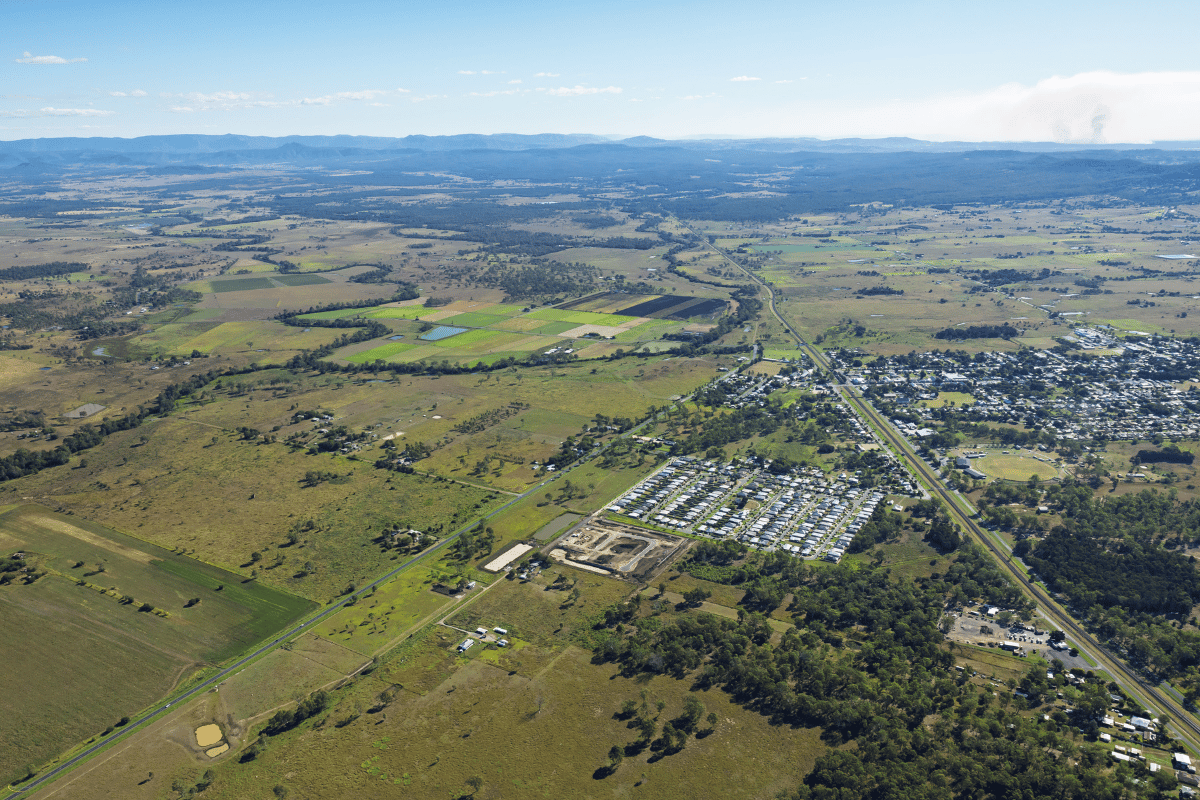
UDIA Establish Magazine, Winter 2026 – Atrio’s Jenna Spurling recently contributed to UDIA Establish Magazine’s In Depth column, themed “Regional Planning”.
What does good regional planning look like in Queensland today?
Queensland presents enormous opportunity, particularly across our regional growth corridors, but delivering the housing our communities need requires smarter coordination between planning, infrastructure and delivery. From our perspective at Atrio, the challenge is less about shortage of land and more about creating clearer, more efficient pathways to secure and bring well- located land to market, faster.
Essential to this is a planning approach grounded in the long term, rather than shaped by political agendas, cycles or outdated frameworks that don't reflect Queensland's growth. An approach that's practical and above all consistent, especially at our current rate of growth.
Atrio is currently delivering 4000-plus lots across six Local Government Areas (LGAs) and every area requires something different. If industry played by the same rules across every corridor (within reason), it wouldn't matter if a project was in Moreton Bay, Ipswich or Gold Coast. We'd have clarity on how we approach development feasibility, making it faster and less risky to bring housing Queenslanders desperately need to market.
This sort of standardisation would have its challenges but it's certainly possible, and now that we are reaching the edges of our existing urban areas, there is no better time.
I think industry and government are broadly aligned in wanting better housing outcomes, and smarter delivery to keep affordability in check, so let's agree as a broader region what it is we want, and work towards that.
Where are current regional planning frameworks falling short?
Currently, our greatest challenges are inconsistent standards, land availability, and infrastructure delivery. Ultimately these challenges lead to reduced competition and overall, slower delivery and increased unaffordability.
Across SEQ, unconstrained Urban Footprint land is becoming increasingly difficult to find, however there is an opportunity to move toward more standardised planning frameworks across Queensland, including these outer growth areas, which could significantly improve affordability, project viability and broader housing supply. Importantly, this is not about forcing density into areas where the market isn't ready for it, but rather allowing planning frameworks to provide a broader range of housing outcomes where demand and growth support it.
However, this only works if infrastructure delivery keep space and in many areas, this simply isn't occurring at the pace required. The amount of urban footprint land that still can't be unlocked is staggering. Many greenfield areas are currently fragmented, which makes the scale of infrastructure required unviable for affected development sites.
The Residential Activation Fund has been an excellent step in addressing existing constraints, however longer-term funding and delivery mechanisms will be critical as growth corridors continue to evolve.
How can better aligning planning and infrastructure delivery improve projects?
Someone buying a house and land package might agonise over bathroom tiles or tap hardware, but probably will not consider the capacity of the local sewer treatment plant, their electrical network, or the conditions and cost borne by the developer to upgrade an intersection to save 10 minutes being added to their daily commute.
Infrastructure delivery is incredibly complex across multiple layers of government, authorities and utility providers. Despite how interconnected the outcomes are, many of these entities operate under different policies, priorities, funding pathways and delivery timeframes. Projects can quickly become non-viable within this delicate ecosystem of approvals, infrastructure dependencies and holding costs, where ultimately no single authority or entity is responsible for enabling development.
Better coordination and empowerment across authorities and utility providers would help unlock entire corridors, streamline planning, free up Council and Authority resources and provide greater certainty to industry. Ultimately, developers need this certainty to mitigate risk and move forward with confidence. If roles, responsibilities and timeframes are clearer, it creates greater accountability across the process and allows both industry and government to focus more strategically on long term growth and housing delivery.
What would unlock greater investment in regional areas?
Besides the planning and infrastructure challenges discussed, regional projects are also navigating labour shortages, cost escalation, rising interest rates and the broader economic impacts flowing from the recent Federal Budget. Combined with the realities of distance, these factors significantly impact the cost of building in regional areas. Considering general economic stimulus, or more specific incentives focusing on supply chain or using smarter technology both administratively and on site could help make regions more appealing.
What makes me hopeful is that industry is willing to invest, private capital is in abundance and demand is there.
What will unlock greater investment is more certainty and less risk in the feasibility stage that then carries through the entire development process. That will allow developers, lenders and overall competition to enter the regions with confidence, regardless of the macro level issues outside our control.
But it's not just up to government and authorities to make things happen. Developers need to shift their thinking and be willing to flex or adapt.
If we can improve certainty, coordination and long-term planning across these regional areas, we will be in a much stronger position to attract investment and deliver the housing Queenslanders will increasingly need.
Published via UDIA Establish Magazine - 23/07/2026
Based in Southeast Queensland, Atrio works with developers, investors and landowners locally and across Australia to acquire, negotiate and deliver exceptional property projects. Atrio’s team spans a range of disciplines including development and project management, design, town planning, property economics, construction management, sales and marketing – ensuring the experience and technical expertise to cover projects from large residential subdivisions through to industrial, commercial and boutique developments.